
Dental implants, which offer a strong and aesthetically pleasing way to replace lost teeth, have completely changed modern dentistry. For patients looking to restore their smile and oral function, these prosthetic implants provide several advantages because they are made to resemble the form and function of real teeth.
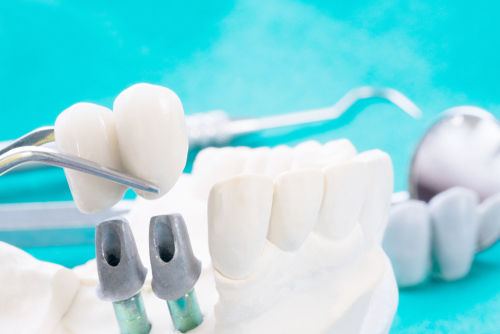
The prosthetic crown, abutment, and implant fixture are the three primary parts of a dental implant. The implant fixture is a tiny titanium post that is surgically placed into the mandible, where it undergoes osseointegration or the fusion of the implant with the surrounding bone. This integration keeps the jaw’s bone from deteriorating and offers a solid base for the new tooth. As a link between the implant and the prosthetic crown, the abutment is subsequently fastened to the implant fixture. The restoration is then finished when the prosthetic crown, which is created to order to match the natural teeth’s size, shape, and color, is fastened to the abutment.
The ability of dental implants to restore natural teeth’s appearance and functionality is one of their main benefits. Dental implants restore the entire tooth structure, from root to crown, in contrast to conventional tooth replacement choices like dentures or bridges, which only replace the visible portion of the tooth. With this all-encompassing repair, patients can confidently eat, speak, and smile without having to worry about the slippage or discomfort that come with having removable dentures.
In addition, dental implants provide stability and endurance over the long term; with the right maintenance, they may last a lifetime. Dental implants are not prone to cavities or decay, in contrast to natural teeth, which may need root canal therapy. But to maintain the health and durability of dental implants, proper oral hygiene habits like brushing, flossing, and routine dental checkups are crucial.
The capacity of dental implants to stop jawbone deterioration is another benefit. Because there is no longer any stimulation from chewing forces, the surrounding bone gradually deteriorates once a tooth is gone. This may affect the stability of neighboring teeth and cause changes in the appearance of the face, such as a sunken or aged aspect. Like real tooth roots, dental implants stimulate the underlying bone, preserving bone density and the structural integrity of the jawbone.
Additionally, a variety of individuals with differing degrees of tooth loss might benefit from dental implants due to their adaptability in terms of treatment alternatives. Dental implants can be tailored to each person’s specific requirements and preferences, whether they are replacing a single tooth, several teeth, or an entire arch of teeth. Dental implants can also be used to anchor removable dentures, giving denture wearers a more snug and comfortable fit.
Even though dental implants have many advantages, not everyone may benefit from them. A patient’s eligibility for implant treatment must be thoroughly assessed based on factors such bone density, dental hygiene practices, and general health. Furthermore, a few medical disorders like untreated gum disease or uncontrolled diabetes may have an impact on how well dental implant surgery goes.
To sum up, dental implants are a very practical and successful way to replace lost teeth, and they have several benefits over more conventional methods. Dental implants give patients a natural-looking, long-lasting smile that improves overall quality of life because they can restore both form and function. Speak with a licensed dental practitioner if you’re thinking about getting dental implants to find the best course of action for your unique requirements.